 Image via Buena Vista Pictures Distribution
 By
Michael Block
Published Mar 1, 2026, 5:42 PM EST
Michael Block is a 14 time GLAM Award nominated writer, producer, and host of the podcast Block Talk. Throughout his time in the entertainment industry, he has worked on and off Broadway as a stage manager, written several produced plays, critiqued hundreds of theatrical performances, drag and cabaret shows, and has produced events randing from drag competitoons to variety concerts!
On Block Talk, he interviews nightlife personalities, covers the wide world of entertainment through features, ranking episodes, and recaps ALL of Drag Race, as well as Dragula and Survivor. He has interviewed hundreds of RuGirls that span the globe at DragCon NYC, DragCon LA, and DragCon UK.
In his free time, he makes one-of-a-kind jewelry and gift baskets with his mom. He is a proud member of the LGBTQ+ community.
Sign in to your Collider account
Add Us On
follow
Follow
followed
Followed
Like
Like
Thread
Log in
Here is a fact-based summary of the story contents:
Try something different:
Show me the facts
Explain it like I’m 5
Give me a lighthearted recap
By
Michael Block
Published Mar 1, 2026, 5:42 PM EST
Michael Block is a 14 time GLAM Award nominated writer, producer, and host of the podcast Block Talk. Throughout his time in the entertainment industry, he has worked on and off Broadway as a stage manager, written several produced plays, critiqued hundreds of theatrical performances, drag and cabaret shows, and has produced events randing from drag competitoons to variety concerts!
On Block Talk, he interviews nightlife personalities, covers the wide world of entertainment through features, ranking episodes, and recaps ALL of Drag Race, as well as Dragula and Survivor. He has interviewed hundreds of RuGirls that span the globe at DragCon NYC, DragCon LA, and DragCon UK.
In his free time, he makes one-of-a-kind jewelry and gift baskets with his mom. He is a proud member of the LGBTQ+ community.
Sign in to your Collider account
Add Us On
follow
Follow
followed
Followed
Like
Like
Thread
Log in
Here is a fact-based summary of the story contents:
Try something different:
Show me the facts
Explain it like I’m 5
Give me a lighthearted recap
Over the past 50 years, we have been the gift of sensational cinema. Movies have taken us to far-off lands, told true stories that changed our history, and pushed our imaginations to the extremes. Within the scope of those fifty glorious years, we’ve witnessed some truly perfect films.
In a near-impossible task, we’ve determined ten titles that are perfect masterpieces. They also just so happened to define the last five decades in the world of movies. Whether through impact or influence, these perfect films have served as a blueprint for future films to utilize. While there are easily hundreds of other films that can be swapped in, these ten are remarkably special.
10 'Parasite' (2019)
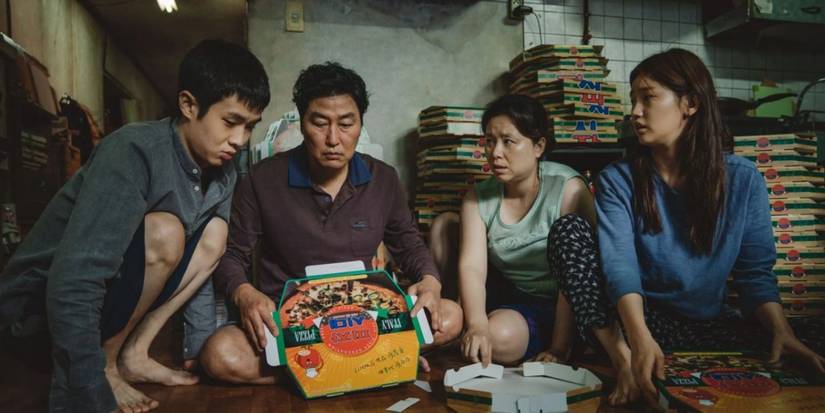 The Kim family assembles pizza boxes in a scene from 'Parasite'Image via NEON
One film that truly reshaped American cinema was Bong Joon Ho’s captivating Parasite. Giving American audiences a reason to appreciate and seek out foreign language films, Parasite’s award run was nothing short of phenomenal. The South Korean black comedy thriller follows the Kims, a poor family who cunningly infiltrate the lives and home of the wealthy Park family by posing as unrelated, highly qualified employees. Diving deep into the themes of class struggle, greed, and social inequality, Parasite pushes the individuals to dark, chaotic, and tragic consequences that redefine how the desperate poor fight amongst themselves for scraps from the rich.
A flawless, genre-bending script, Parasite makes Downton Abbey look like a kid’s show. Through the smart and strategic use of comedy and drama, thriller and tragedy, Bong meticulously brings the viewer on a journey whose end you simply are not prepared for. Its deep critical conversation on class and economic disparity resonates now more than ever. Becoming the first ever foreign language film to earn the Academy Award for Best Picture was well deserved. Parasite was proof that excellent filmmaking knows no language.
9 'The Shawshank Redemption' (1994)
 Image via Columbia Pictures
There has been an array of legendary cinematic adaptations of Stephen King’s works, but none were as perfect as The Shawshank Redemption. Based upon his short story, the Frank Darabont film tells the story of Andy Dufresne (Tim Robbins), a banker wrongly convicted of murdering his wife, who maintains hope and integrity over two decades in the brutal Shawshank State Penitentiary. He forms a deep friendship with fellow inmate Red (Morgan Freeman) while navigating corruption and secretly plotting his escape. A timeless tale of hope, friendship, and resilience, The Shawshank Redemption is a masterful work of storytelling, with pristine performances and exquisite cinematography.
A powerful exploration of the power of optimism, the emotional film is unlike many prison-set narratives. Darabont doesn’t try to make Andy’s experience squeaky clean. His bouts of hardship help to define his ultimate journey. Robbins and Freeman provide some of the strongest performances of the decade, helping to define their illustrious careers. When we see an oak tree today, thanks to this film, we can’t help but feel a sense of hope. The Shawshank Redemption is an endless reminder that our inner freedom is our greatest gift.
8 'Oppenheimer' (2023)
 Cillian Murphy looking pensive at the end of 'Oppenheimer'Image via Universal Pictures
Though there could be many individuals to earn this title, one of the most revolutionary directors of the 21st century is Christopher Nolan. With an extraordinary body of work, Nolan has done a sensational job at bringing epic storytelling to life. Many of his films could make an expansive version of this list, but the top spot would always go to Oppenheimer. Based on the 2005 biography American Prometheus by Kai Bird and Martin J. Sherwin, Oppenheimer dramatizes Oppenheimer's studies, his direction of the Los Alamos Laboratory, and his 1954 security hearing. With Cillian Murphy taking on the role of the Father of the Atomic Bomb, the mind-blowing biopic is both a magnificent work of storytelling and performance.
Part of the blockbuster double feature with Barbie, Oppenheimer helped invite bring moviegoers back to the cinema. Rather than being a dense, dialogue-driven film, Nolan brought an evocative vision into a pulse-pounding experience. Beyond Murphy in the titular part, the entire ensemble, which includes Robert Downey Jr., Emily Blunt, Matt Damon, Florence Pugh, and Josh Hartnett, among many others, soar as they embark on the non-linear storytelling that dives deep into the psychological mythology of Oppenheimer. From the exceptional cinematography to the groundbreaking use of sound, and lack there of, Oppenheimer is more than just a story about a man of science. A profound journey through morality, power, and the devastating, long-lasting consequences of scientific achievement, Oppenheimer went big, and the risk was rewarded.
7 'Pulp Fiction' (1994)
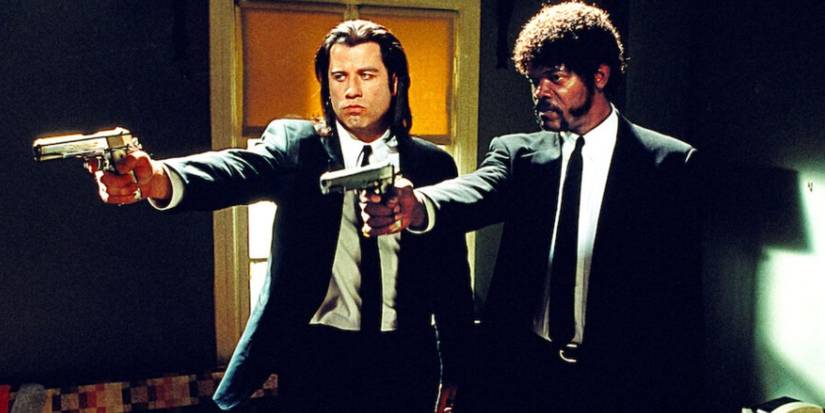 John Travolta and Samuel L. Jackson as Vincent Vega and Jules Winnfield wearing black suits and holding a gun in 'Pulp Fiction'Image via Miramax Films
Quentin Tarantino’s influence on Hollywood is boundless, but the film that officially defined him as one of the greats was 1994’s black comedy, Pulp Fiction. A film that tells four intertwining stories, Pulp Fiction focuses on the lives of LA mob hitmen Jules and Vincent (Samuel L. Jackson and John Travolta), boxer Butch (Bruce Willis), and a gangster’s wife Mia (Uma Thurman). Bringing the theme of redemption to the forefront, Pulp Fiction gives you everything: a botched robbery, a drug overdose, and a faked boxing match, for a bloody good time. Helping to energize the 90s with a unique approach in post-modern storytelling, Pulp Fiction masterfully united dark humor with highly-stylized violence.
Tarantino’s ability to turn the mundane into character-defining moments helped Pulp Fiction to achieve its greatness. The film featured so many iconic moments, including the Royale with cheese bit, and an exceptional soundtrack, including “Misirlou,” that made it a well-rounded and complete film. We still reference Pulp Fiction because it infused itself into pop culture so effortlessly. We get giddy when we see any of our main trio reunite for anything Pulp Fiction. Though not so much when Thurman and Jackson attempt to find any semblance of humor in a bomb like The Kill Room. It’s safe to say that Pulp Fiction not only defined the 90s in cinema but shaped Hollywood forever.
6 'The Matrix' (1999)
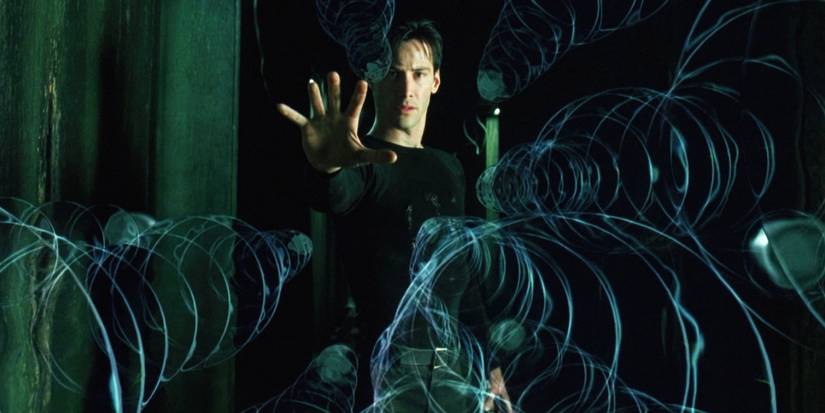 Neo slowing bullets down in the 1999 film, The Matrix.Image via Warner Bros.
In 1999, we entered The Matrix, and movies have never been the same since. Directed by the Wachowskis, the groundbreaking sci-fi action masterpiece follows computer hacker Neo (Keanu Reeves), who discovers that the world he knows is a simulated reality created by sentient machines to keep humanity docile while harvesting them for bioelectric power. He joins rebels led by Morpheus (Laurence Fishburne) and Trinity (Carrie-Anne Moss) to fight the machines, learning to manipulate the simulation's rules to gain superhuman abilities and uncover the truth.
When you hear the title, you can visualize the film. From the bullet-time visual effects to the cyberpunk aesthetics, The Matrix’s distinct style helped it establish its unique identity and set the stage for a franchise. Some come for the insanely good martial arts sequences. Others seek out the profound philosophical approach found inside. The Wachowskis instilled a deep conversation about the nature of reality, free will versus determinism, and the search for truth. The Matrix continued to revolutionize science fiction blockbusters straight into the 21st century.
5 'Schindler's List' (1993)
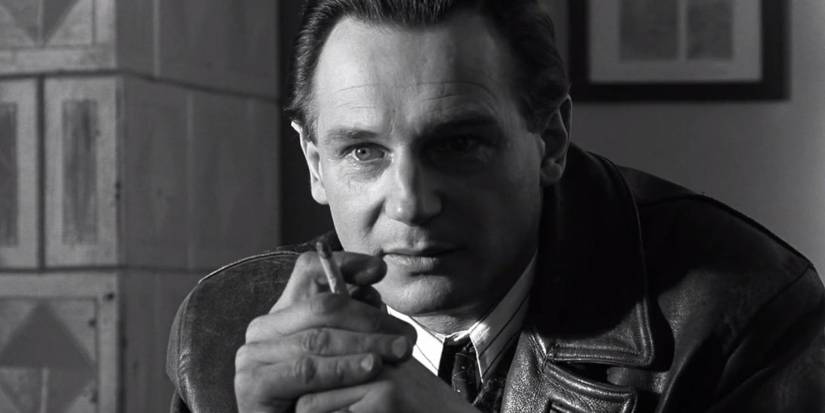 Image via Universal Pictures
One of the most profound films ever created was Steven Spielberg’s visually captivating and emotionally heavy Schindler’s List. The classic wartime drama follows the true story of Oskar Schindler (Liam Neeson), a German businessman who saved over 1,100 Jews during the Holocaust by employing them in his factories to protect them from concentration camps. Focusing on Schindler’s moral transformation from a war profiteer to a savior, the film’s intense historical approach blended with a rich emotional pull has set it above many films in the same category. But what makes Schindler’s List a step above the rest is its extraordinary black-and-white visual cinematography and its integration of colorized storytelling.
Schindler’s List is a technical marvel. Through a haunting atmosphere, helped by Spielberg’s longtime collaborator John Williams, Schindler’s List’s harrowing story is not meant to stoke change but remind the world about the rare heroes that were born out of moral necessity on the other side. The concept of “whoever saves one life, saves the world entire” is at the heart of the film, and it still resonates all these decades removed. Alongside Neeson’s career-defining performance, Ralph Fiennes is equally gripping as Amon Göth. Historical cinema is forever a part of Hollywood storytelling. Holocaust stories will continue to be made. And they will always aspire to hold the same significance as Spielberg’s perfect movie.
4 'Star Wars: Episode V- The Empire Strikes Back' (1980)
 Darth Vader pointing his red lightsaber in The Empire Strikes Back.Image via Lucasfilm
It’s a wild thought to imagine how richly impactful George Lucas’ Star Wars has been on science fiction. While the original film started a franchise, it’s the sequel, Star Wars- Episode V: The Empire Strikes Back that defined the franchise. As Luke Skywalker (Mark Hamill) trains with Yoda (Frank Oz), Princess Leia (Carrie Fisher), Han Solo (Harrison Ford), and Chewbacca (Peter Mayhew) are captured, setting up an epic battle between Luke (Mark Hamill) and Darth Vader (James Earl Jones), where a shocking revelation comes to light. Though it’s a brilliant showdown between good and evil, the film will forever be remembered for its groundbreaking twist: “No, I am your father.” And the Yoda backpack moment, but that’s a distant second.
We have been trained to believe that the heroes always win. The Empire Strikes Back defied that. Though we ultimately know that it was the second part of the saga and Darth Vader will lose in the end, this film had us all wondering if our heroes could not be victorious. With a darker tone than the first and more complexities with the ever-growing story, The Empire Strikes Back served as an exceptional continuation while also standing solidly on its own. The Star Wars mythology and lore are not only expanded, but character arcs are also enhanced. But let’s be honest, we adore the wide-ranging locales that Lucas takes us to and the epic moments we see there. Between the intense Hoth battle, the Dagobah training, and the Cloud City climax, each iconic moment serves to build the bigger puzzle.
3 'Jurassic Park (1993)
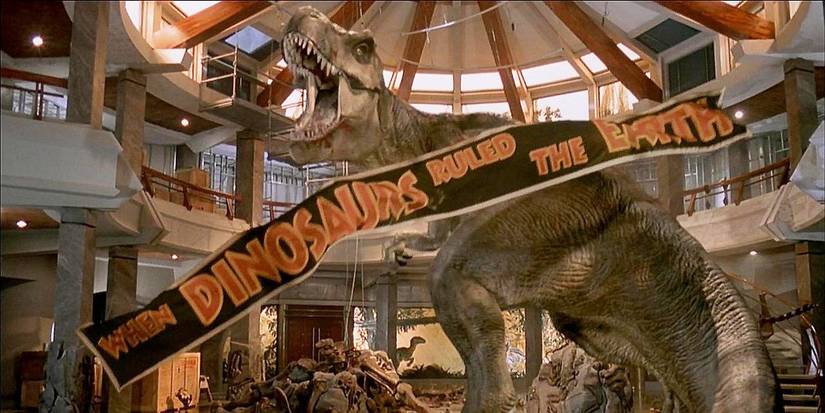 A Tyrannosaurus rex roaring at the end of Steven Spielberg's Jurassic Park (1993)Image via Universal Pictures
We’ve had an affinity for dinosaurs, but we were never fully immersed in the sensational creatures until Steven Spielberg brought us Jurassic Park. In the first film of the franchise, paleontologists Alan Grant and Ellie Sattler (Sam Neill and Laura Dern), along with mathematician Ian Malcolm (Jeff Goldblum), are invited by billionaire John Hammond (Richard Attenborough) to tour a new theme park on Isla Nublar featuring cloned dinosaurs. The trip turns into a fight for survival when a security failure, sabotaged by a worker, releases the predators, including T-Rex and Velociraptors. As InGen cloned dinosaurs using prehistoric DNA extracted from amber-trapped mosquitoes, Jurassic Park opened our imaginations to the possibility of what it might be like to walk among these beautiful beasts.
Giving us a dose of summer blockbuster, Jurassic Park seamlessly transported Michael Crichton’s novel to the big screen. Through exceptional animatronics and revolutionary CGI, Jurassic Park’s visceral suspense-building and terror provided for a perfectly terrifying experience. They may be giant creatures, but these carnivores still manage to sneak up on you and eat you while you’re on the loo! While the entertainment factor is at its max, Spielberg ensured that Crichton’s conversation about the hubris of humanity and the dangers of manipulating nature through technology could have a catastrophic effect on our future. Jurassic Park established itself as a major player in pop culture, jumpstarting a franchise and finding a space in theme parks around the world. Fret not, the animatronics at Universal Studios won’t try to eat you— just provide a memorable thrill.
2 'The Dark Knight' (2008)
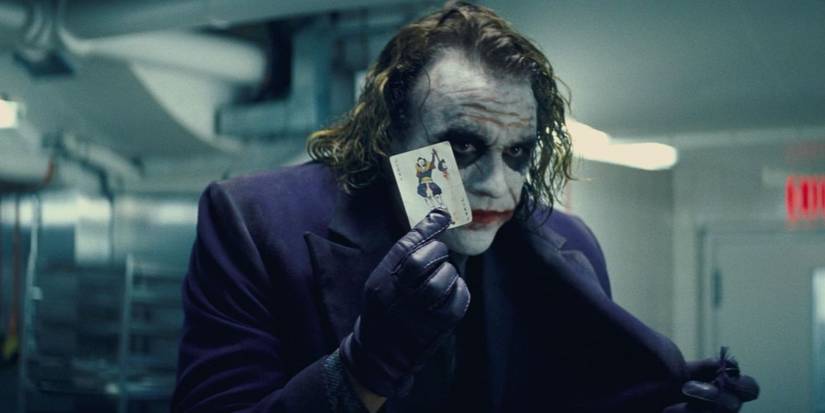 The Joker hold a Joker card in The Dark Knight.Image via Warner Bros. Pictures
The 21st century has seen the superhero blockbuster blow up as the defining genre in the world of popcorn movies. We go for the action and see our favorite heroes in action. But what if you could go see your favorite comic book characters while also experiencing a rich psychological drama? You certainly did with Christopher Nolan’s groundbreaking The Dark Knight. The second part of his trilogy, Batman (Christian Bale), Lieutenant Jim Gordon (Gary Oldman), and DA Harvey Dent (Aaron Eckhart) form an alliance to dismantle Gotham's organized crime. Their efforts are thwarted by the Joker (Heath Ledger), a chaotic criminal mastermind who plunges the city into anarchy, kills Rachel Dawes (Maggie Gyllenhaal), and turns Dent into the villainous Two-Face. Not a bad arc for a singular film! Forever synonymous with Ledger’s award-winning performance, The Dark Knight became the recipe for every superhero flick to come.
Through a blend of high-stakes, grounded storytelling and thematic depth exploring morality, chaos, and heroism, The Dark Knight is richly unique. You could easily remove the iconic DC Comic names and still receive a fervent crime drama. The Dark Knight is remembered for the Joker, but the nuanced arc for Batman continued to allow the character to establish himself as a completely different iteration, ripe for the new century. By removing the typical comic-book tone in favor of something realistic and gritty, The Dark Knight is more than just a good-versus-evil tale. It’s a fully developed movie that just so happens to use classic IP.
1 'The Lion King' (1994)
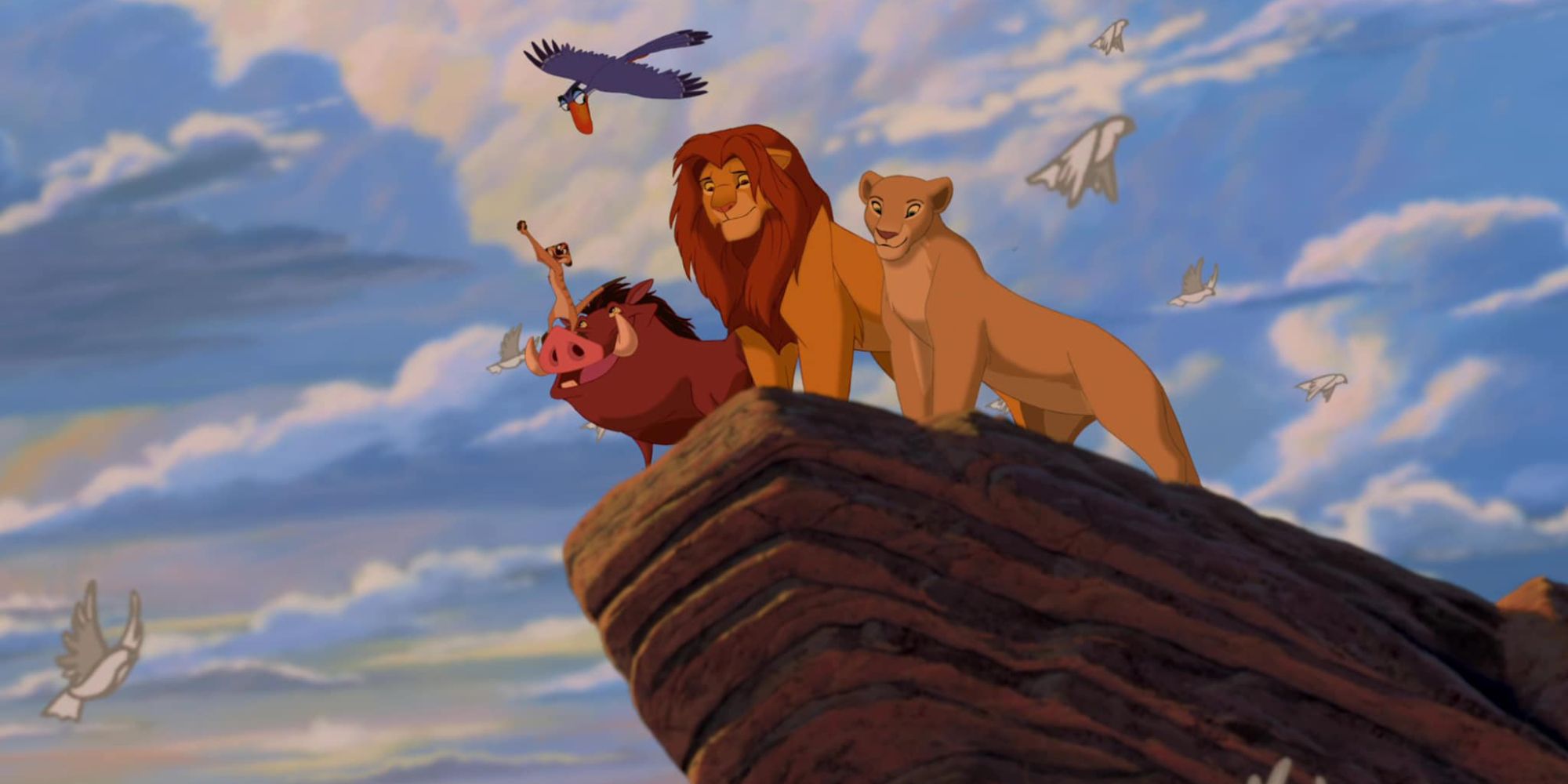
 Image via Buena Vista Pictures Distribution
The Disney Renaissance changed animation forever. Collectively, the films from the 90s instantly became core memories for everyone who watched them in theaters. But one film stood out at the top and defined the decade: The Lion King. In the 1994 animated classic, audiences were dropped into the African savannah as Simba (Matthew Broderick), a young lion cub destined to rule the Pride Lands, who flees into exile after his wicked uncle Scar (Jeremy Irons) orchestrates the death of King Mufasa (James Earl Jones). Raised by Timon and Pumbaa (Nathan Lane and Ernie Sabella) under the "Hakuna Matata" philosophy, an adult Simba returns to challenge Scar, reclaim his throne, and restore balance to the circle of life. Loosely inspired by William Shakespeare’s classic drama Hamlet, Disney balanced an iconic soundtrack with darker themes to craft a flawless cinematic masterpiece.
The golden era of Disney hand-drawn animation, The Lion King remains a timeless tale that has been passed down for generations. Disney has been known for introducing audiences to talking animals, but never have we met the brilliant characters within this nuanced animal kingdom. Each character, voiced by the perfect performer, is wonderfully brought to life, earning a place in the Disney pantheon. With Elton John and Tim Rice’s whimsical soundtrack and Hans Zimmer’s score, music becomes its own important character. The legacy of The Lion King remains profoundly a part of the tapestry of entertainment and pop culture. You’ll laugh, you’ll cry, you’ll scream, you’ll feel warmth. The Lion King is the complete package.
 Like
Follow
Followed
The Lion King
G
Family
Animation
Drama
Adventure
Release Date
June 15, 1994
Runtime
89 minutes
Director
Roger Allers, Rob Minkoff
Writers
Irene Mecchi, Jonathan Roberts, Linda Woolverton, Rick Maki, Jorgen Klubien, Chris Sanders, Joe Ranft, Thom Enriquez, Larry Leker, Barry Johnson, Francis Glebas, Burny Mattinson, Andrew Gaskill, Gary Trousdale, Lorna Cook, Tom Sito, Mark Kausler, Kevin Harkey, Ed Gombert, Jim Capobianco
Like
Follow
Followed
The Lion King
G
Family
Animation
Drama
Adventure
Release Date
June 15, 1994
Runtime
89 minutes
Director
Roger Allers, Rob Minkoff
Writers
Irene Mecchi, Jonathan Roberts, Linda Woolverton, Rick Maki, Jorgen Klubien, Chris Sanders, Joe Ranft, Thom Enriquez, Larry Leker, Barry Johnson, Francis Glebas, Burny Mattinson, Andrew Gaskill, Gary Trousdale, Lorna Cook, Tom Sito, Mark Kausler, Kevin Harkey, Ed Gombert, Jim Capobianco
Cast
See All-
 Matthew Broderick
Simba (voice)
Matthew Broderick
Simba (voice)
-
 Moira Kelly
Nala (voice)
Moira Kelly
Nala (voice)
 Expand
Collapse
Expand
Collapse
-
 Movie
Movie
-
 The Lion King
-
 The Dark Knight
What To Watch
 July 20, 2025
The 72 Best Movies on Netflix Right Now
Trending Now
July 20, 2025
The 72 Best Movies on Netflix Right Now
Trending Now
 Markiplier’s Horror Film Debut Takes an Incredibly Boring Descent Into an Ocean of Blood – 'Iron Lung' Review
 The 20 Greatest Action Thriller Masterpieces of All Time, Ranked
 Top 20 Movie Masterpieces of the Last 100 Years, Ranked